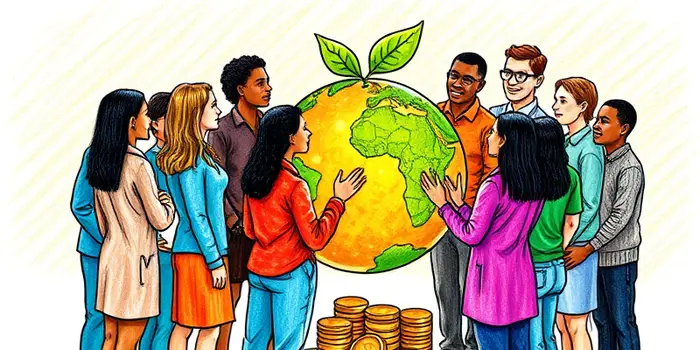
The stakeholder economy represents a transformative shift in how businesses measure success, placing equal emphasis on social and environmental impact alongside profit. This new paradigm invites organizations to see themselves as integral threads in the fabric of society, accountable to employees, communities, customers, and the planet. By redefining responsibility, the stakeholder economy inspires a financial system that serves everyone.
In recent decades, research has shown a positive correlation between sustainable practices and robust financial performance. Since the early 2020s, over 180 CEOs, including those from the Business Roundtable, have pledged to uphold stakeholder capitalism principles. The World Economic Forum, founded in 1971, has championed these ideas, mainstreaming conversations on ethical governance, environmental stewardship, and equitable growth globally.
At its core, stakeholder capitalism challenges the traditional notion that companies exist solely to maximize shareholder returns. Rooted in R. Edward Freeman’s seminal 1984 article, the model asserts that businesses hold obligations to a broader constituency. Over the past four decades, this philosophy has evolved through academic debate, corporate commitments, and institutional endorsements, steadily reshaping boardroom priorities and industry benchmarks.
The evolution of the stakeholder economy can be traced through key milestones: the 1995 foundational work that formalized stakeholder theory, the Business Roundtable’s 2019 statement redefining corporate purpose, and global frameworks like the UN Sustainable Development Goals. Each milestone has underscored the move from a narrow focus on profit to a holistic understanding of a company’s role in society and the environment.
Understanding the contrast between shareholder and stakeholder capitalism illuminates the essence of this shift. Shareholder primacy prioritizes immediate financial returns for investors, often externalizing social and environmental costs. In contrast, stakeholder capitalism embraces long-term sustainable value creation, internalizing externalities, and aligning corporate strategy with human and ecological welfare. This approach requires new metrics, transparent reporting, and broader stakeholder engagement.
Below is a comparison of key dimensions that distinguish these two models, offering a clear framework for businesses looking to transition.
Stakeholder capitalism recognizes a wide array of groups, each with distinct interests and rights. To build trust and mutual benefit, companies must understand and address the needs of these partners, embracing resilient and sustainable businesses that uplift all parties involved.
Financing the stakeholder economy requires innovative models that balance profit with purpose. Impact investing, green bonds, and social impact funds channel capital toward initiatives generating both financial returns and societal benefits. By integrating environmental, social, and governance (ESG) criteria into investment decisions, stakeholders can track performance beyond mere profit, building portfolios that reflect shared values.
Emerging metrics and reporting frameworks are critical. Traditional KPIs like return on equity must be complemented by measures such as carbon footprint reduction, employee well-being indices, and community development scores. Companies that publish clear, standardized ESG data foster accountability and empower investors to support meaningful change.
Despite its promise, the stakeholder economy faces hurdles. Ambiguity in defining stakeholder value can lead to superficial commitments or purpose-washing. Balancing conflicting stakeholder demands—such as higher wages versus lower prices— requires nuanced governance and robust dialogue. Without clear standards, companies risk pleasing no one.
To navigate these challenges, businesses can adopt structured models of stakeholder engagement. Instrumental models link stakeholder value to financial performance, while structural approaches embed representatives—such as workers or community members—directly into governance bodies. By fostering open dialogue through advisory panels and participatory forums, companies can cultivate genuine partnerships.
Practical steps include: updating corporate charters to reflect broader missions, integrating ESG targets into executive compensation, and conducting regular stakeholder impact assessments. These measures translate philosophy into action and create a roadmap for continuous improvement. Collaboration with civil society and industry consortia further amplifies positive outcomes.
Adoption varies across regions. Countries like Germany have long-standing practices of worker representation on boards, while U.S. corporations are increasingly exploring multi-stakeholder charters. Emerging markets face distinct challenges, balancing rapid growth with sustainable development. International frameworks, such as the UN SDGs and EU regulations, guide harmonized progress.
Looking ahead, businesses must embrace innovative governance and accountability structures to meet rising expectations. Addressing climate change, social justice, and inclusivity demands more than incremental adjustments; it calls for systemic transformation. Leaders who embed stakeholder principles into their core strategy will not only mitigate risks but also unlock new opportunities for growth and impact.
The stakeholder economy invites us to reimagine finance as a collaborative force for good. By championing holistic health and happiness, companies, investors, and communities can co-create value that endures across generations. As we forge this path, every decision counts—every investment, every policy, every dialogue can drive us toward a more equitable and sustainable future.
References